

Conversion rate optimisation
Research, page improvements and measured experiments
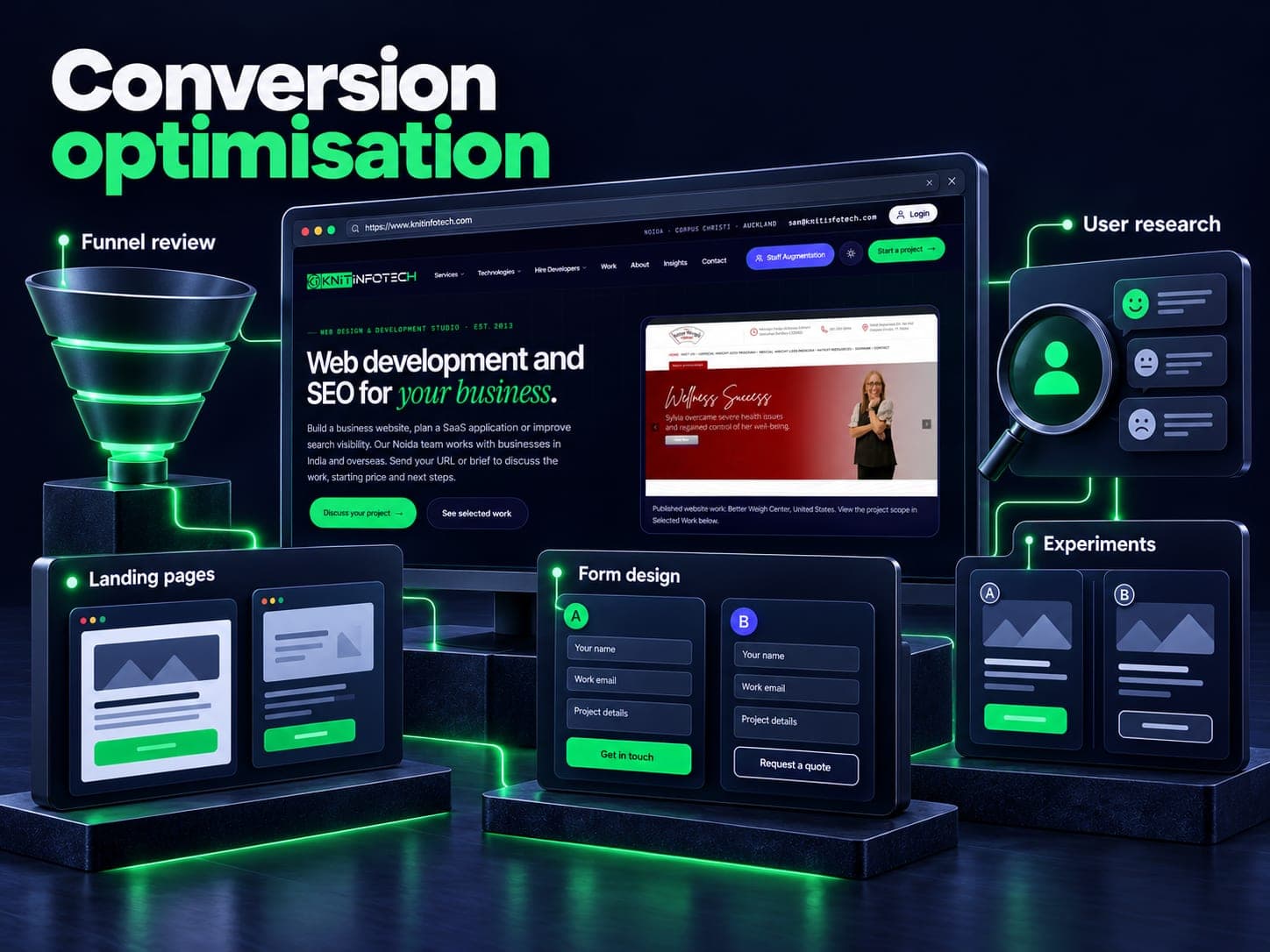
Find where visitors struggle before changing a page. We review funnel data and user feedback, improve landing pages or forms, and agree a suitable experiment and measurement plan for the traffic available.
Starting from USD 650/monthFinal scope and price agreed before work starts.
Find the point where a visitor gets stuck
Start with a real task: request a quote, choose a service, finish a purchase or book an appointment. Check whether a visitor can understand the offer and complete that task on a phone as well as a desktop. Analytics can indicate where to look; a task review helps explain the difficulty.
We review the available funnel events, form behaviour and customer feedback. Recording or research tools are used only within an agreed access and consent scope. Findings become specific changes, such as a clearer delivery answer, an accessible error message or a shorter route to the appropriate enquiry.
Choose a method the traffic can support
A randomised test needs a baseline, a meaningful effect to detect and enough eligible traffic. Calculate the sample and likely duration before promising an A/B test. If the traffic cannot support it, use qualitative research and a documented sequence of changes.
For a sequential release, record the change and compare suitable periods while noting other influences. A before-and-after difference alone does not prove that the design caused it. Work on a paid campaign’s landing page may also need the campaign and traffic mix held in view.
Measure accepted outcomes
Separate CTA clicks, form starts, successful submissions and enquiries your team accepts as relevant. A successful form event is not automatically a customer. Reports explain what improved, what remains uncertain and which decision the evidence supports next.
Related reading: paid search.
What CRO includes
Funnel analytics
GA4 events, funnel reports and segments that show where people drop out, and which segment does it worst.
Qualitative research
Session recordings, heatmaps, on-page surveys and moderated tests with a handful of real users, which explain the why.
Landing page design
Pages built around a single job, with copy that answers the objection instead of restating the headline.
A/B & sequential testing
One variable, one primary metric, a sample size fixed before launch, and a stopping rule everyone agreed to.
Form optimisation
Fewer fields, error messages that say what is wrong, sensible defaults and mobile keyboards. Often the single biggest win on the site.
Implementation
Winning variants coded into the site by our developers, so the change survives the next deployment and does not cost you page speed.
How a CRO programme runs
Instrumentweeks 1–2
Events, funnels, recordings and form analytics installed and checked, because most existing setups are missing at least one step.
Researchweeks 2–4
What the numbers say and what the recordings say, reconciled into findings ranked by how much money each is costing.
Hypothesesweek 4
A backlog written as testable statements, each with an expected lift and an honest estimate of effort.
Test & shipongoing
One test at a time per page, then the winner built properly into the site rather than left in the testing tool.
Reportmonthly
Wins, losses and cumulative lift since the programme started. The losses stay in the report; they are what stops the same idea returning.
Starting from USD 650/month
Conversion research and an agreed allowance for page, form and visitor-flow improvements. Experiment design depends on usable traffic and data. Tool licences and larger development work are separate.
CRO, answered
What is conversion rate optimisation?
Raising the share of visitors who do the thing you want, enquire, buy, book a call, by researching why the others do not and testing changes rather than debating them. The output is evidence about your customers, which tends to outlast any individual test.
How much can CRO improve results?
The result depends on your starting point, traffic and the changes tested. We agree a baseline, a measurement plan and the effect worth detecting, then report the observed result and its limitations. We do not promise a percentage increase.
What is the difference between CRO and SEO?
SEO helps relevant people find the site. CRO examines whether visitors can understand the offer and complete the intended action. Search visibility, recorded enquiries and qualified leads are measured separately; a conversion improvement does not guarantee a ranking increase.
How long until we see results from CRO?
Research-led fixes usually ship inside the first month. A/B tests take as long as the traffic needs to reach the sample size, typically two to six weeks each. A programme is worth judging at six months, not at six weeks.
Do we need a lot of traffic to do CRO?
Qualitative research can help at low traffic. For a randomised test we calculate the sample and duration from your baseline, minimum detectable effect, significance level, power and eligible traffic; there is no universal monthly conversion threshold. Before-and-after comparisons are reported with their confounding factors.
What does a CRO programme cost?
Starting from USD 650/month. Conversion research and an agreed allowance for page, form and visitor-flow improvements. Experiment design depends on usable traffic and data. Tool licences and larger development work are separate. The proposal confirms the work, fees and responsibilities before you commit.
Where are visitors getting stuck?
Send the page and the action visitors struggle to complete. We can discuss the available evidence, research scope and a measurement method suited to the traffic.