

AI voice agents
Calls, booking and human transfer
Plan a voice assistant for the calls your business can support responsibly. We scope knowledge-based answers, calendar and CRM connections, escalation, recording requirements and reviewable transcripts before a pilot.
Starting from USD 1,999/projectFinal scope and price agreed before work starts.
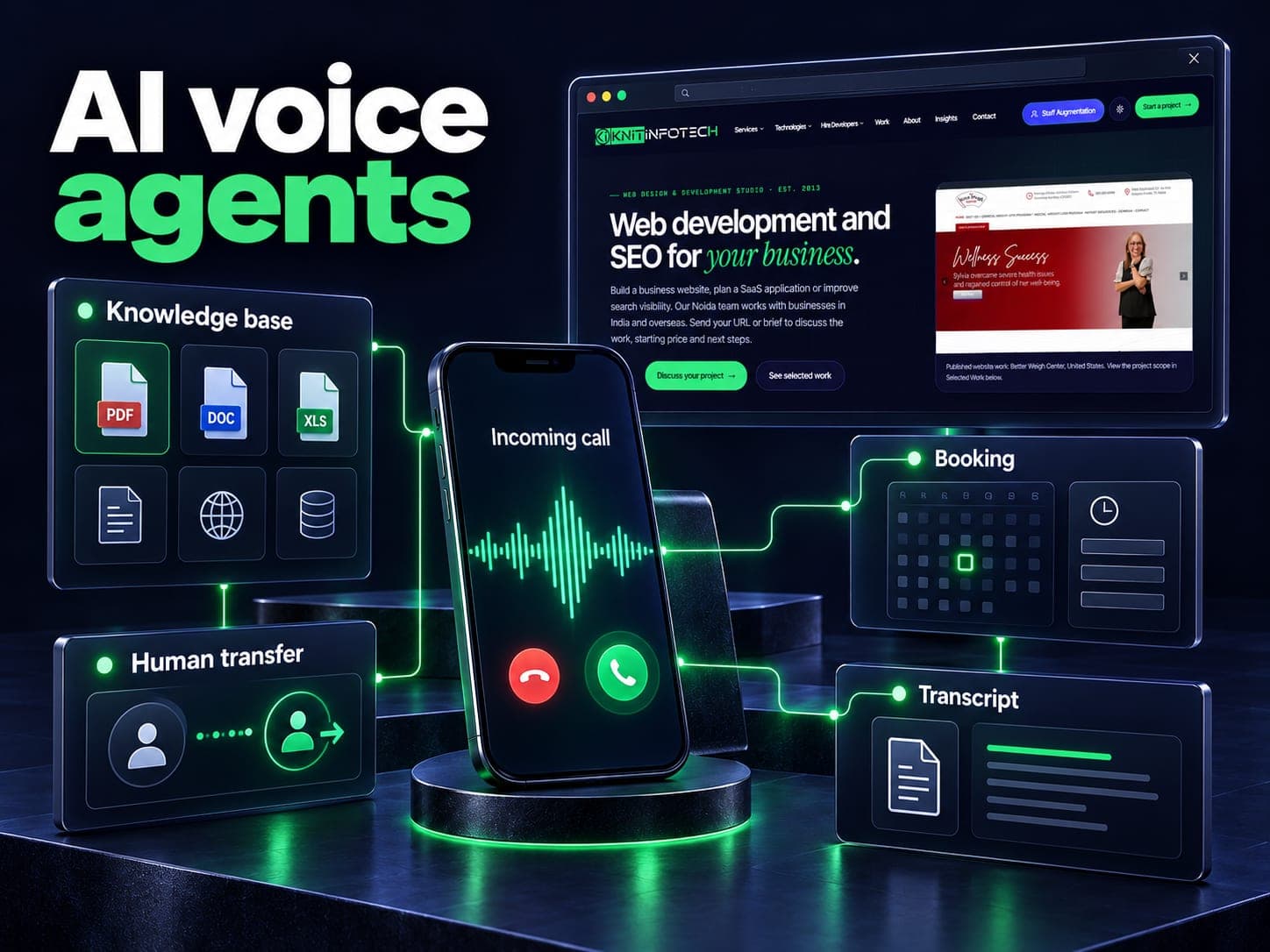
Choose the calls the assistant can handle
Start with a few supported scenarios: opening hours, service coverage, an appointment request or a message for the team. Confirm the phone provider, account ownership, approved business information and any calendar or CRM access required.
A voice workflow needs more than a spoken answer. The design should cover interruption, background noise, a caller correcting a detail and a request outside the assistant’s scope. Transfers depend on the phone setup and staff availability; the fallback might be a message and a follow-up task.
Listen to representative tests
Before a pilot, agree test conversations and let the people handling calls review them. Check names, numbers, appointment changes and escalation, including what happens when an integration is unavailable. The assistant must not pretend to be a named member of staff or make unsupported commitments.
Recording, disclosure, retention and access requirements are confirmed for the intended use. The proposal also separates setup, phone charges, platform subscriptions and usage costs.
Keep the operating record useful
Where permitted, a call record can show the supported request, action taken and whether a person needs to follow up. A booking or CRM update may need workflow automation. Approved source information can also support the website assistant, while each channel keeps its own test and handoff rules.
Related reading: assistant.
What a voice agent includes
Inbound receptionist
Answers on the second ring at any hour, works out what the caller wants, and either resolves it or routes it.
Calendar & CRM booking
Real availability from Google, Outlook or your booking tool, with buffers respected, and the caller's details written into the CRM.
Knowledge-grounded answers
Hours, price ranges, coverage areas, directions and policies taken from your own documents rather than improvised.
Human transfer
A warm transfer with a spoken summary to whoever picks up, so the caller does not start the story again.
Outbound follow-ups
Appointment reminders and callbacks where the local rules permit them, with an easy opt-out on every call.
Transcripts & analytics
Every call transcribed, summarised and given an outcome, with a weekly digest of what people are actually ringing about.
From scenarios to a live number
Call reviewweek 1
We listen to a sample of your recorded calls, or sit with whoever answers the phone, and write down what really comes in.
Scripting & voiceweek 2
Conversation design, the disclosure wording, transfer rules, and a voice you choose after hearing three on your own script.
Build & integrateweeks 3–5
Telephony, calendar and CRM connected, knowledge base loaded, and the fallback path tested with the phone unplugged.
Rehearsal callsweek 5
Your team ring in and try to break it, with accents, noise and interruptions. Everything it fumbles gets fixed or routed to a person.
Live on overflow firstweek 6 onwards
It starts by taking only the calls nobody answered, then moves forward in the queue as the transcripts justify it.
Starting from USD 1,999/project
One scoped inbound voice workflow with agreed questions, permissions and human handoff. Telephone numbers, calling, transcription, speech, model and platform charges are separate.
Voice agents, answered
How natural does an AI voice agent sound?
Good enough that most callers do not ask, and current models handle interruptions and a range of accents well. Rather than argue about it, we build a version on your own scenarios and let you ring it before you commit to anything.
What happens when it cannot help?
It transfers to your team with a spoken summary, or takes the details and creates a task if nobody is available. It is instructed to say it does not know rather than guess, which is the behaviour that keeps you out of trouble.
Can it book appointments?
Yes, into Google Calendar, Outlook, Calendly-style tools or your own booking system, using real availability including buffers. The caller gets a confirmation by SMS or email before the call ends.
How much does a voice agent cost?
Starting from USD 1,999/project. One scoped inbound voice workflow with agreed questions, permissions and human handoff. Telephone numbers, calling, transcription, speech, model and platform charges are separate. The written proposal confirms deliverables, exclusions, timeline and the final price before work starts. Hosting, licences, platform subscriptions and usage charges are separate where required.
Is it legal to use AI to answer calls?
Yes, with disclosure. The agent identifies itself as an assistant, and call recording is configured to the rules of the region it operates in, which differ between India, the US states, Australia and New Zealand. We set that per number.
Which languages does it handle?
English and Hindi from the start, including the mixed speech most Indian callers actually use. Other languages are available and we test them with native speakers before going live rather than trusting the vendor's list.
Could a voice assistant help your team?
Describe the common calls, phone setup and escalation contact. We can agree representative test scenarios, provider requirements and pilot costs.