

Cross-platform app development
Flutter and React Native for iOS and Android
Develop an app for both mobile platforms with a shared codebase where it fits. We design platform-appropriate screens, connect the backend, test on real devices and plan store releases and maintenance.
Starting from USD 10,000/projectFinal scope and price agreed before work starts.
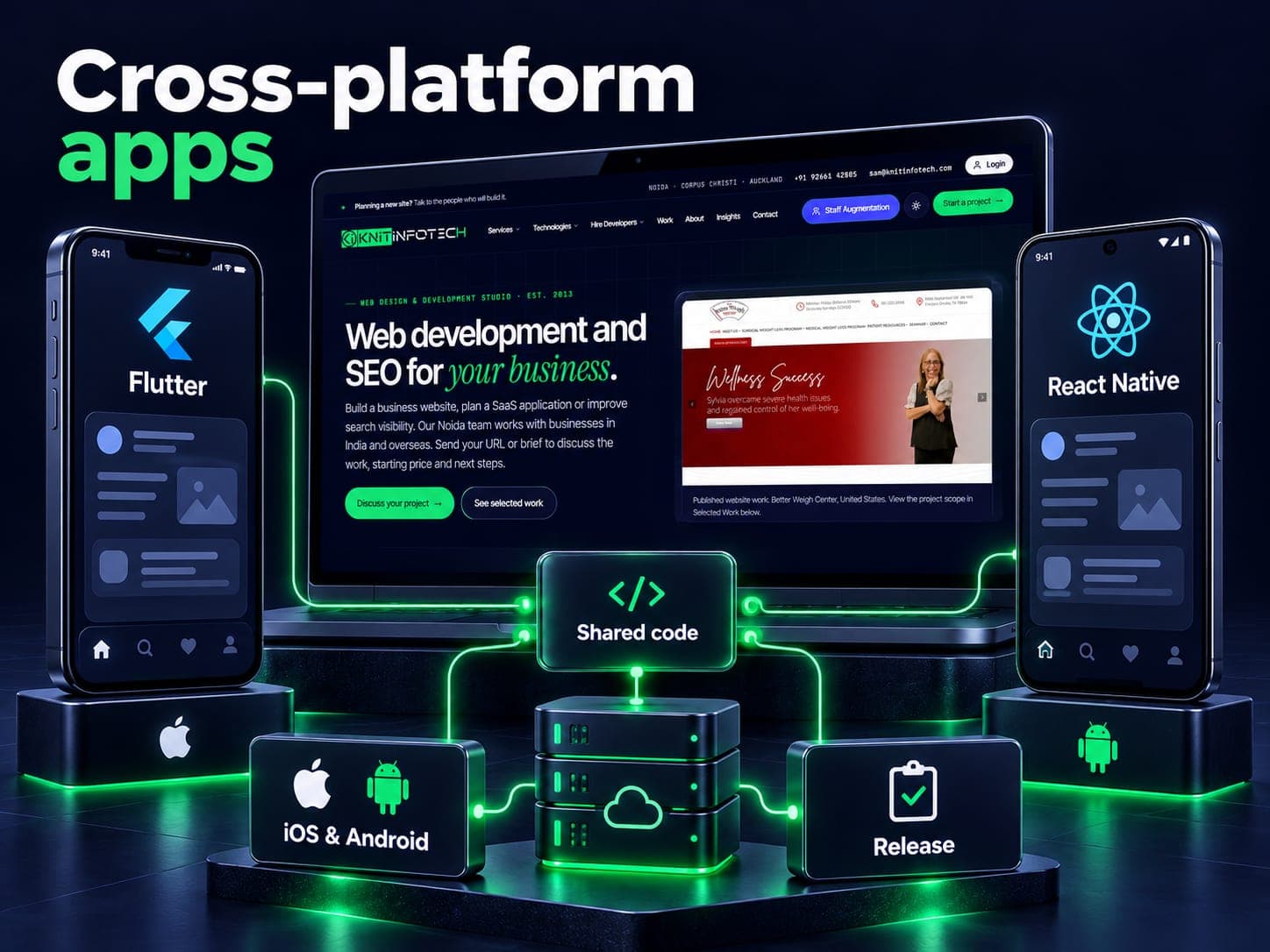
Share the parts of the app that fit
Flutter and React Native can share interface code and business logic across iOS and Android. That can reduce duplicate development, but it does not remove platform differences, device testing or separate store submissions. The right choice starts with the product rather than a promised percentage saving.
List the required device features, offline behaviour, backend connections and the team maintaining the app. Camera, location, Bluetooth, notifications and payments each need their supported platform behaviour checked. Some requirements need native code even when the rest of the application is shared.
Compare frameworks against the actual release
Flutter and React Native have different ecosystems and development models. A team’s existing skills, required libraries and interface requirements help decide between them. A native approach may be preferable when the platform-specific requirements dominate the work.
An illustrative booking-app scope might share account and appointment screens while treating notifications and permissions separately. Acceptance checks would cover both platforms, slow or failed network requests and the supported devices. Store approval remains outside the delivery team’s control.
The proposal identifies the first release, repository and account responsibilities, launch checks and ongoing updates. The wider Android and iOS development service covers product discovery and backend requirements as part of the same planning decision.
Related reading: Android and iOS development.
What cross-platform development includes
Flutter development
Dart with Riverpod or Bloc for state, and platform channels written by us where a native capability is needed.
Explore →React Native development
Expo or the bare workflow in TypeScript, with validation and business logic shared with your web app rather than rewritten.
Explore →Design for both platforms
One design system that still honours the navigation patterns and back-button behaviour each platform's users expect.
Backend & integrations
Firebase, Supabase or a custom API, plus payments, push notifications and analytics wired up and tested.
Store release
Both stores on the same day, with listings, screenshots and the review process handled from our side.
Explore →Maintenance
OS releases, framework and dependency upgrades, and small improvements on a retainer with stated hours.
From app planning to release
Scope & frameworkweek 1–2
The jobs the app does, the integrations it needs, and the Flutter or React Native decision with the reasoning written down.
Prototypeweeks 2–4
A clickable design tested with real users, so the arguments about navigation happen before the code exists.
Buildweeks 4–12
Two-week sprints, each ending with a test build on your phone rather than a screenshot in a status email.
QA & releaseweeks 12–14
Device matrix including older Android handsets, automated tests, then submission to both stores together.
Supportongoing
Thirty days of monitoring and fixes included, then a retainer only if you want one.
Starting from USD 10,000/project
A scoped shared-code first release using Flutter or React Native. Target platforms, core screens, backend integration and store-submission responsibilities are confirmed in writing.
Cross-platform apps, answered
What is cross-platform app development?
Writing the app once in a framework such as Flutter or React Native and shipping the same codebase to the App Store and Google Play, rather than building and maintaining two separate native applications.
What are the advantages of cross-platform?
Sharing a codebase can reduce duplicate development and maintenance. The saving depends on native modules, device features, testing and release requirements. We compare the approaches against your actual scope before recommending one.
What are the disadvantages?
Heavy graphics, AR and sustained background processing still favour native. New platform features can arrive in the frameworks a few months late. Where one feature needs it, we write a native module and keep everything else shared.
Should we choose Flutter or React Native?
Flutter when the interface must look identical on both platforms and there is real animation work. React Native when you already have React developers or a web app to share logic with. Both are mature enough that team fit matters more than benchmarks.
How does the cost compare with native?
Compare the full release scope: shared screens and logic, native modules, backend work, device testing and ongoing updates. Sharing code can reduce duplicate work, but it does not halve every project’s cost. We quote the actual platform requirements; published starting fees and exclusions remain as shown on this page.
Can cross-platform apps use the camera, GPS and Bluetooth?
Yes, through well-maintained plugins for the common cases, and through native modules we write ourselves when no plugin covers what you need. We check the plugin situation during scoping so nothing turns into a surprise in week nine.
What is the starting price for cross-platform apps?
Starting from USD 10,000/project. A scoped shared-code first release using Flutter or React Native. Target platforms, core screens, backend integration and store-submission responsibilities are confirmed in writing. The written proposal confirms deliverables, exclusions, timeline and the final price before work starts. Hosting, licences, platform subscriptions and usage charges are separate where required.
Let’s plan your iOS and Android app
Describe the core screens, device features, integrations and maintenance team. We can compare Flutter, React Native and native work against that scope.