

AI content operations
Research, drafts and repurposing with editor approval
Give editors a repeatable way to use AI for research, briefs, drafts, translations and channel variants. We design the workflow, review sources and keep people responsible for accuracy and publication.
Starting from USD 1,499/projectFinal scope and price agreed before work starts.
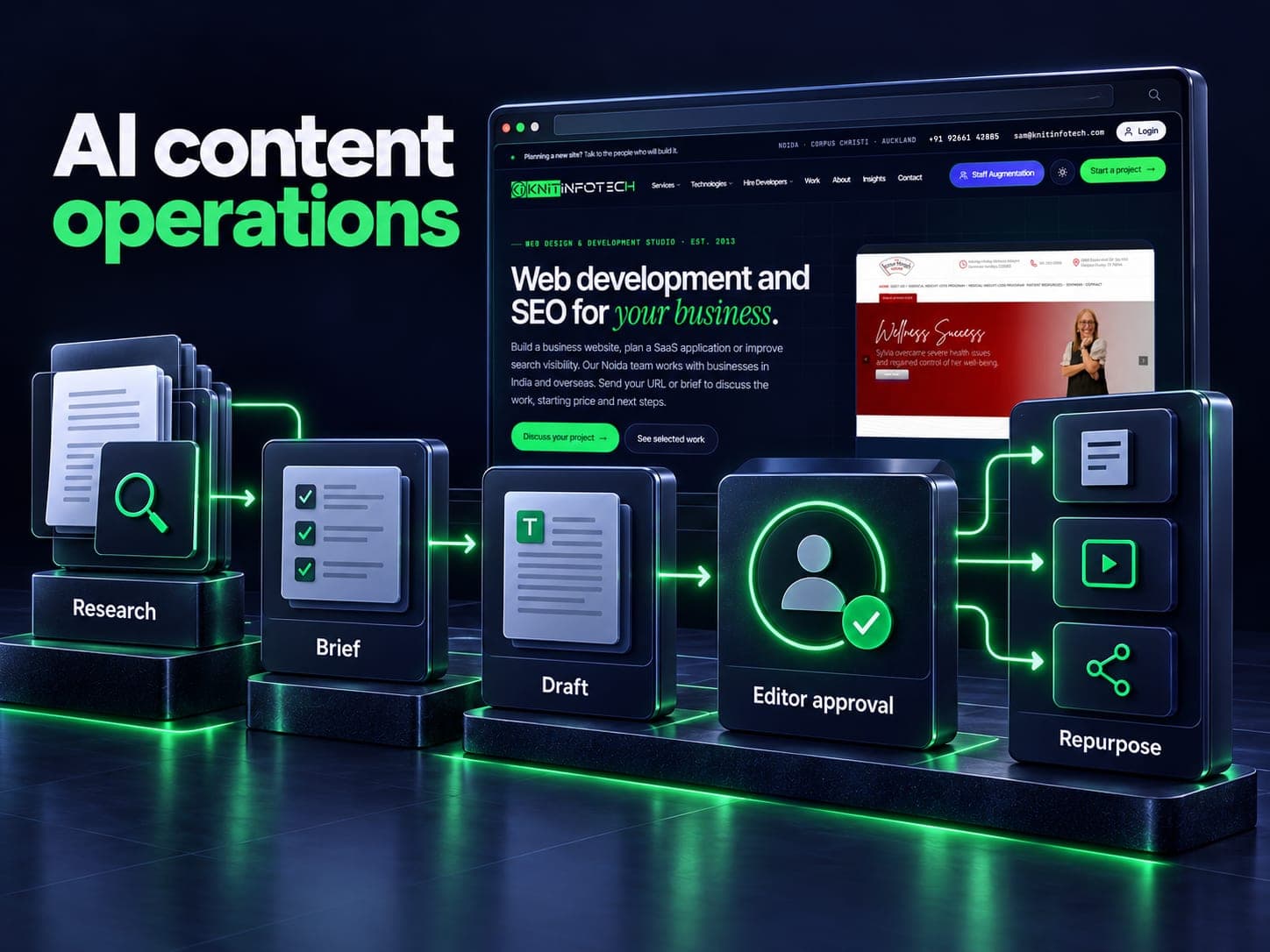
Build around the editorial decisions
Start with one piece of content and follow it from brief to publication. Who supplies the product facts? Which sources can an editor use? Who checks a quote, translation or price? Those decisions shape the workflow before a model is connected.
AI can help organise research, prepare an outline or adapt approved material into another format. A named editor remains responsible for the argument, factual checks, voice and publication approval. Drafts should make missing evidence visible rather than fill the gap with an invented example.
Make one workflow inspectable
An illustrative first scope might turn a specialist interview into an article brief and a review queue. The reviewer checks the source transcript, approves factual statements and chooses which sections to publish. A later step can prepare a newsletter summary from the approved article.
The connections to your CMS, document tools and review system are part of workflow automation. Translation needs an appropriate language reviewer; the existence of a translation step does not establish that every language is supported.
Judge useful work rather than draft volume
Record the time spent on preparation, editing and correction before and after the pilot. Also review source accuracy, publication quality and whether the material answers an actual buyer question. Search visits, citations and enquiries are separate measures within the wider content programme. More output alone is not a successful editorial result.
What content operations includes
Pipeline design
Brief to publish, mapped as a real workflow with a human review step that cannot be bypassed by anybody.
Research & briefs
Search data, competitor coverage and audience questions compiled into briefs with sources attached, so claims can be checked quickly.
Drafting assistance
Structured first drafts with the argument laid out and gaps flagged, for an editor to shape rather than to rewrite from scratch.
Repurposing
One long piece turned into social posts, a newsletter section, a video script and a slide, each written for its own format.
Translation & localisation
Market versions drafted and then reviewed by a native speaker, because a mistranslated price or claim costs more than the saving.
Quality measurement
Rankings, engagement, assisted leads and AI citations tracked per piece, so throughput is never the only number in the report.
Building the pipeline
Watch the current processweek 1
We follow two pieces through your existing workflow and time each stage, which usually finds the bottleneck somewhere nobody expected.
Voice and standardsweek 2
A voice guide and a quality checklist agreed with your editors, since these are what the automated steps get measured against.
Build the workflowweeks 2–4
Research, drafting, repurposing and metadata steps wired up in n8n and your CMS, with the review gate built in from the start.
Run ten piecesweeks 4–6
A real batch through the new pipeline with editors timing themselves, then the steps that slowed them down get removed.
Hand over or run itongoing
Training and documentation so your team owns it, or we operate it for you, priced on volume.
Starting from USD 1,499/project
One agreed content workflow setup with source material, review gates and handover. Ongoing production, monitoring, model usage and platform subscriptions are separate.
Content ops, answered
Will the content sound generic?
It will if you publish what comes out of the model. That is why the editor gate exists and why we start by writing a voice guide. AI carries the research and the structure; a person supplies the opinion, the examples and the decisions about what to cut.
Does Google penalise AI-written content?
Google judges the page, not the tool that produced it. Thin, padded, unedited output performs badly, which is what people are actually observing when they say AI content is penalised. Edited, genuinely useful content performs like any other content.
What does the workflow look like?
Brief, then research with sources, then a structured draft, then a named editor, then SEO and schema, then publish, then measurement. The editor step is a gate rather than a suggestion, and the pipeline will not move a piece past it.
Can our own team run the pipeline?
Yes, and most clients end up doing so. We build it, train your editors, hand over the documentation and the tooling, and stay available for the awkward parts. Alternatively we run it for you and bill by volume.
How much does it cost to set up?
Starting from USD 1,499/project. One agreed content workflow setup with source material, review gates and handover. Ongoing production, monitoring, model usage and platform subscriptions are separate. The written proposal confirms deliverables, exclusions, timeline and the final price before work starts. Hosting, licences, platform subscriptions and usage charges are separate where required.
Which tools do you build it on?
Claude and GPT for the language work, n8n for the pipeline itself, and your existing CMS, because moving a content team to a new CMS in the same project as a new workflow is a good way to fail at both.
Want a clearer content workflow?
Tell us what you publish, who reviews it and where work gets held up. We can scope one workflow with clear source checks and approval.