

Website redesign services
UX improvements with a planned content and URL migration
Improve your website with a clear picture of what already works. We review design, content, accessibility and performance, map any agreed URL changes, test the migration and monitor the site after launch.
Starting from USD 1,499/projectFinal scope and price agreed before work starts.
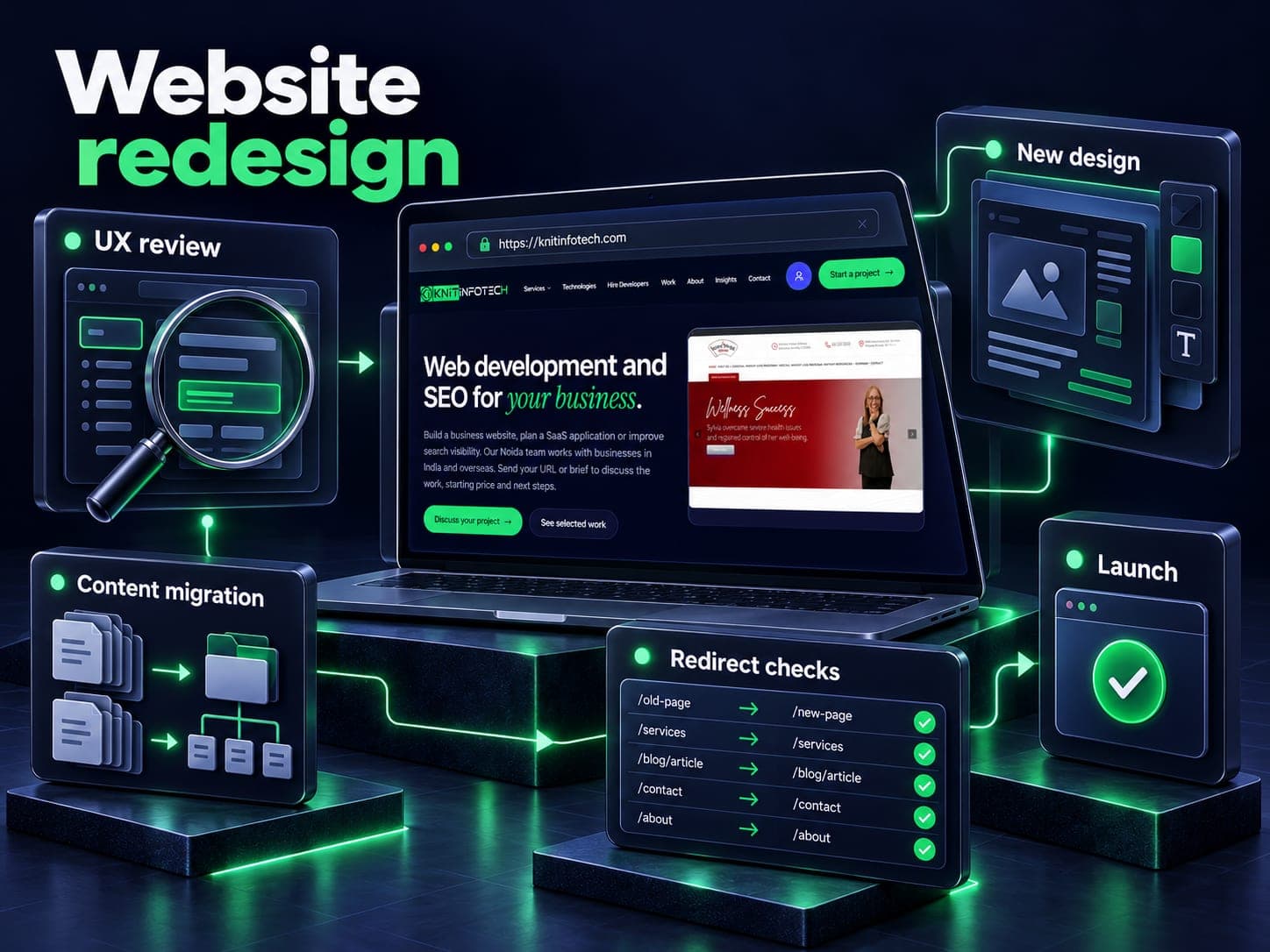
Establish what needs changing
A redesign starts with evidence from the current site: content, search landing pages, important URLs, editing problems, forms, mobile behaviour and performance. Age alone is not a reason to replace a working website.
Agree which problems the project should solve and what already works. The inventory includes pages with business, link or customer value even when recent search clicks are low. Existing URLs stay in place unless a separately reviewed migration decision requires a relevant redirect.
Review the new experience before launch
Use a prototype and staging site to review realistic content, page states and key actions. The scope identifies what is being redesigned, what content moves, supported integrations and the checks needed before release. A change in the underlying system may need a separate website build assessment.
Content that answers a useful question should be reviewed on its merits. New gaps can be briefed through the content programme rather than filled with a last-minute generic rewrite.
Make the migration and handover reviewable
Check the agreed URLs, canonicals, forms, navigation, analytics and rollback plan. Record the launch and monitor the deployed responses and Search Console afterward. A clean launch is a delivery milestone; subsequent crawling, indexing and rankings are measured separately. Ongoing monitoring and support responsibilities belong in the proposal.
Related reading: content plan, rebuild.
What a redesign includes
UX & UI redesign
A new design you approve as a clickable prototype, laid out for the phone first because that is where most of your visitors are.
Performance
Performance checks before release under recorded lab conditions, followed by monitoring of available field LCP, INP and CLS. Field-vitals coverage and collection windows determine when a field assessment is possible.
SEO-safe migration
A URL map built from your own analytics and crawl data, redirects one hop deep, metadata and schema carried across, rankings watched daily.
Content migration & improvement
Review content that earns traffic and enquiries. Agree any consolidation using crawl and search evidence, then map and monitor the affected URLs.
Conversion improvements
A clearer offer above the fold, shorter forms, and calls to action placed where the analytics say people are deciding.
Accessibility
WCAG 2.2 AA as an acceptance criterion, tested with a keyboard and a screen reader rather than an automated score.
From website review to relaunch
Baselineweek 1
Speed, conversion, rankings and traffic by URL recorded and shared, so there is an agreed starting point to be judged against.
Prototypeweeks 2–4
A clickable design in your brand, reviewed on an actual phone rather than a resized laptop window.
Build on stagingweeks 4–8
The new front end goes up beside the live site, and the URL map is agreed line by line before anything is pointed at it.
Launchweek 8–9
Switched over at a quiet hour, redirects live, then Search Console and analytics checked every day for a month.
Verifyday 30 / 90
Speed, conversion and rankings compared against the baseline at day 30 and day 90, including anything that went backwards.
How we manage redesign and migration risks
Nothing that works is thrown away
Identify valuable pages and URLs before design changes, then agree how they will be retained or migrated.
The same URLs
Addresses are kept wherever possible. Where one has to change, it is redirected one-to-one and then monitored.
Measured before and after
You get the baseline and the result side by side, rather than a prettier screenshot and an assurance.
Explore our website work
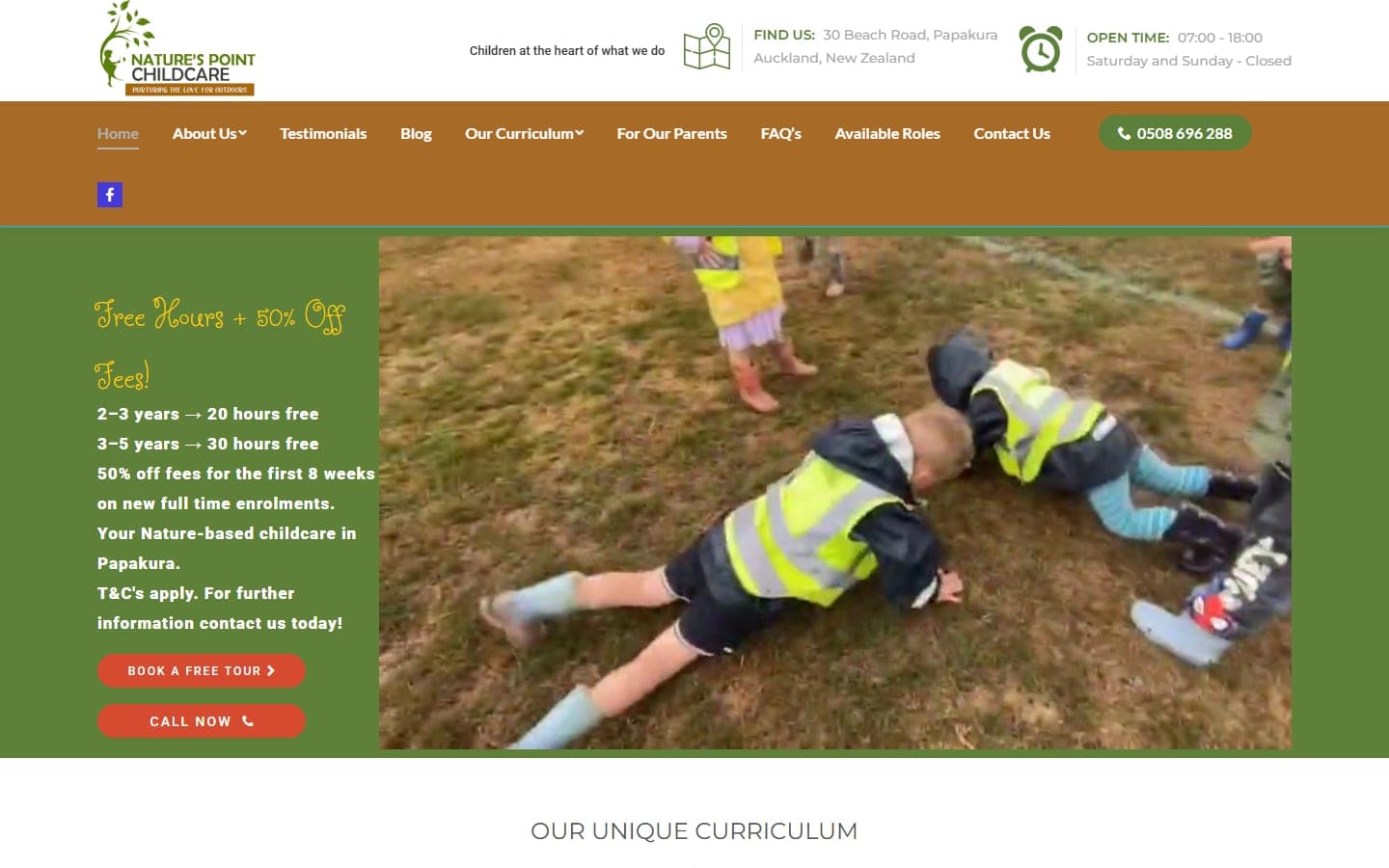
Nature's Point Childcare
A WordPress site for a Papakura childcare centre built around a nature-based curriculum, with six separate curriculum pages, a named-teacher page and its own recruitment section for open roles.

Augusta Laundry
A WordPress site for an Auckland industrial laundry running three distinct trades, aviation, hospitality and industrial, built so each buyer sees only the service line that applies to them.
Starting from USD 1,499/project
A defined business website redesign with agreed templates, existing-URL review, relevant redirect planning and launch checks. Content rewriting, complex migrations, application features, hosting and licences are separate where required. For a WordPress rebuild, compare the package scopes and agree the migration work before quoting.
Redesign, answered
When should we redesign our website?
When it is slow, fails on a phone, cannot be edited without a developer, misrepresents the brand, or is not converting the traffic it gets. Age on its own is not a reason. Plenty of older sites are fine and would be made worse by a rebuild.
Will a redesign hurt our SEO?
A planned migration reduces avoidable risks but cannot guarantee stable traffic or rankings. Keep appropriate URLs, map agreed changes, carry relevant metadata and structured data across, test redirects and monitor Search Console after launch. Compare results with the baseline and investigate any decline.
How long does a website redesign take?
Six to ten weeks for most business sites. The variables are the number of pages, how much content is being improved along the way, and how quickly approvals come back. Ecommerce redesigns take longer because the testing is heavier.
Can we keep our existing content?
We review existing content, URLs and metadata before agreeing the migration. Useful pages are retained where appropriate; any consolidation needs an explicit map and redirect checks. Search visibility can change, so we monitor it after launch and report against the baseline.
Will the site be down during the switch?
No. The new site is built on staging and the switch takes minutes, scheduled for a quiet hour in your time zone. We stay online while it happens and check the critical paths, forms, checkout, phone links, immediately afterwards.
What does a website redesign cost?
A business website redesign starts at USD 1,499/project. We agree the templates, existing-URL review, relevant redirects and launch checks before quoting. Content rewriting, complex migrations, application features, hosting and licences are separate where required. The proposal confirms the final scope and fee. If a WordPress rebuild fits your brief, review the WordPress package scopes alongside the migration work required for the existing site.
What needs to work better on your website?
Send the current URL and the problems you want to solve. We can agree the review scope, protected content and launch checks before planning a redesign.