

WordPress development for your business website
Scope, implementation, testing and handover
Plan the site around your content and editing team. Discuss the theme, structured content, plugins and integrations needed for a practical build or improvement scope.
Content editing and site structure
WordPress can suit a business that needs its own team to maintain pages and content. Discuss the editing workflow, recurring content types, theme requirements and integrations before choosing plugins or a build approach.
Development and ongoing care
Define custom features, forms, migrations, accessibility and performance checks in the scope. Agree responsibilities for hosting, backups, updates and testing. A maintenance plan should identify the work included and the person responsible.
Review website work
The published Better Weigh Center website build documents a WordPress website, its scope and screenshots. Also explore the Teeth 32 product website and Surrey Crescent Laundry service website for two other WordPress projects. For a wider build, see website development. For ongoing capacity, discuss a WordPress developer.
Related technical services: Laravel, Next.js, redesign.
Information to include in the brief
Share the current site, page types, content volume and the people who will edit it. Identify forms, languages, redirects and any CRM or booking integration. For a migration, list the content and URL structure to preserve. Agree who provides copy, images and access to existing systems.
Acceptance and ownership
Define the checks that make the build ready for approval: editing a page, completing an enquiry, opening key pages on mobile and handling missing or invalid input. Discuss plugin licences, admin access and the accounts retained by the client. A handover should identify how updates are tested and what to do if an integration stops working. If the project involves an existing theme or plugin, confirm its constraints before choosing what to retain or replace.
What we build with WordPress
Custom block themes
Designed from your brand and built as native blocks, so editors compose pages without a page builder and without us.
Explore →WooCommerce stores
Catalogue, tax and shipping rules, the payment gateways your market actually uses, and a checkout that holds up on a sale day.
Explore →Migrations and replatforming
Plan the move from an existing theme, page builder or CMS, preserving useful content and URLs with appropriate redirects and launch checks.
Explore →Speed and Core Web Vitals
Plugin audits, query and image work, caching and hosting changes, measured against field data rather than a lab score screenshot.
Explore →Multilingual and multisite
One estate, several languages or brands, with hreflang, a translation workflow and components shared rather than duplicated.
Care plans
Core, theme and plugin updates on staging first, backups tested by actually restoring them, uptime monitoring and security hardening.
Our WordPress stack, by layer
Our WordPress projects
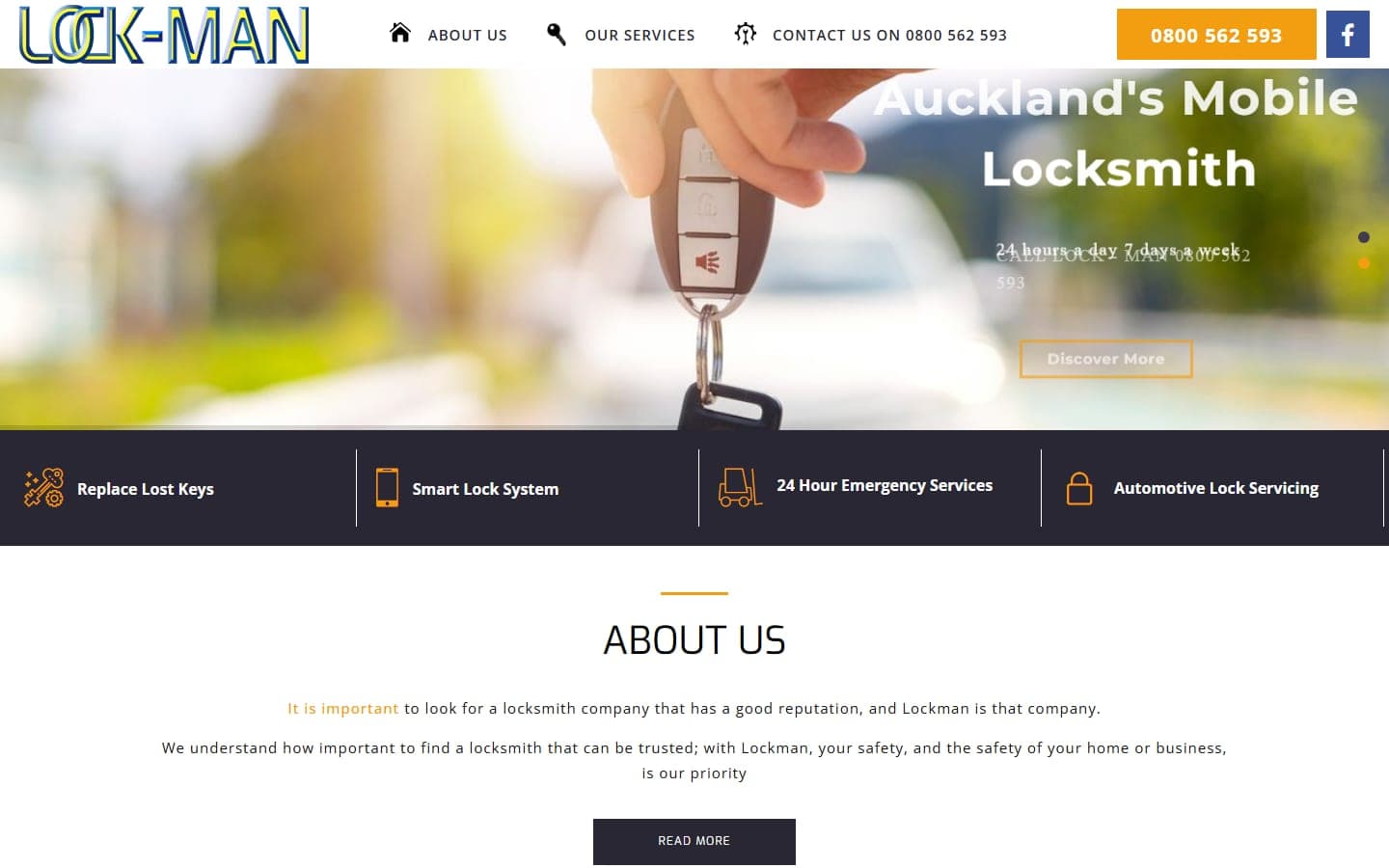
Lockman
A WordPress site for an Auckland mobile locksmith, split into four specific service pages, mobile locksmith, car keys, smart lock systems and emergency locksmith, so an urgent search lands directly on the right one.

Totally Kids
A WordPress site for a single-centre childcare provider structured by what a child actually does at each stage, toddlers, transition to school, and exploring the community, rather than by generic "programmes".
WordPress compared with the alternatives
WordPress vs Next.js with a headless CMS
Compare the editing workflow, required features, integrations and ongoing maintenance. WordPress can suit a team that publishes content regularly. A separate application front end may suit more custom interfaces. A headless approach combines systems and needs clear ownership of both.
WordPress vs Shopify for selling online
Shopify is hosted, with payments, PCI compliance, apps and updates handled for you. Less control, far less operational work. WooCommerce wins when the store is one section of a content-heavy site, when your pricing or product logic is unusual, or when platform fees at your volume outweigh the maintenance you take on.
A custom block theme vs a page builder
Compare the layouts your editors need, the existing content, performance and maintenance before choosing a page builder or custom blocks. For a rebuild, identify the content and features to retain and test the migration approach.
WordPress, answered
Is WordPress secure enough for a business site?
Security depends on the implementation, hosting, access controls and maintenance. Define updates, backups, recovery, administrator access and monitoring in the scope. No platform choice makes a site secure by itself.
Do you use Elementor, WPBakery or Divi?
Not for new builds. Page builders store layout inside post content, which makes pages heavy and marries your content to a plugin permanently. We build custom blocks instead and editors get the same drag-and-drop feel with a fraction of the markup. We will happily maintain a builder site you already own.
Can you make our WordPress site fast?
Start with measured performance and the site’s current implementation. Review plugins, database work, media, scripts, caching and hosting before choosing fixes. Use repeatable checks and field data where available, then measure again after the changes.
How much does a WordPress site cost?
WordPress Starter starts at USD 849/project and WordPress Business at USD 1,499/project. E-commerce on one Shopify or WooCommerce platform starts at USD 2,599/project. Compare WordPress development service packages for page limits, deliverables and exclusions. Custom work is assessed before quoting. WordPress care starts at USD 149/month with an agreed allowance; hosting, licences and major changes are separate.
Can we edit everything ourselves after launch?
That is the entire point of building it this way. Named blocks matching your design system, structured fields for anything repeated, a written handover and a short video. If a routine content change needs a developer, we treat that as a defect in our build rather than a support opportunity.
Can we hire a WordPress developer from you?
Yes. Relevant developer profiles start at USD 18/hour or USD 2,400/month for 160 reserved hours. We confirm relevant experience, availability, responsibilities and the final rate after reviewing the work.
WordPress build, rescue or speed-up?
Send the URL and describe the problem. We can agree the scope and fees for a review of performance and the changes to consider.