

Ecommerce SEO services
Technical search work for categories and products
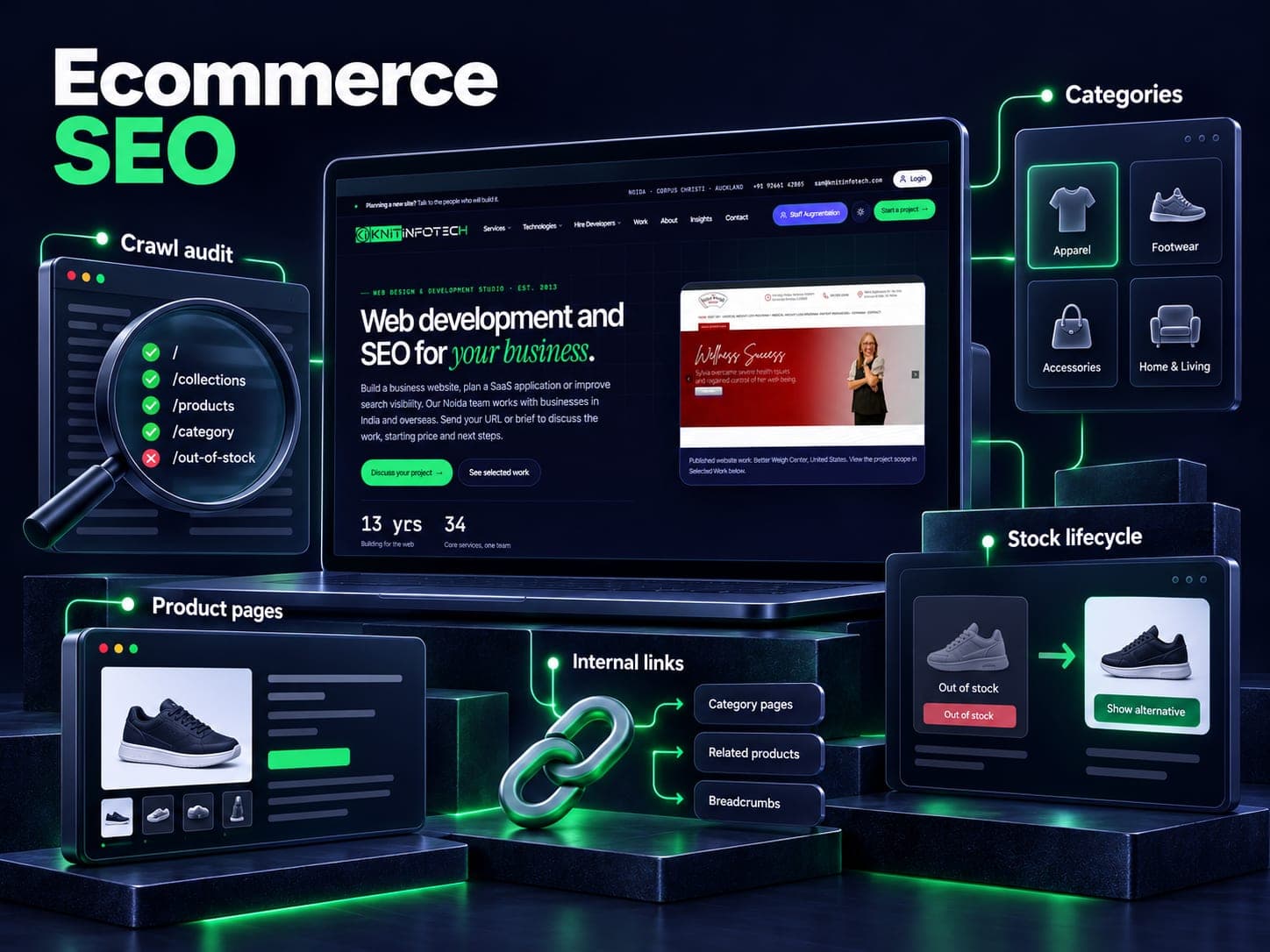
Make your catalogue easier for customers and search engines to navigate. We review crawl behaviour, category and product pages, internal links and product lifecycle rules, then prioritise work around the store's actual search demand.
Starting from USD 649/monthFinal scope and price agreed before work starts.
Help customers find the right products
Your store needs more than individual product descriptions. Customers also search for product types, sizes, uses and comparisons. We review how those searches connect to your categories and products, then prioritise the pages that matter to the business.
Product and category page SEO
Category pages should help a customer choose, with clear descriptions, useful filters and links to relevant products. Product pages need accurate specifications, availability, delivery information and answers to common buying questions. We work with your team to identify missing facts and decide which pages need individual attention.
Technical SEO for a changing catalogue
Filters, variants and changing stock can create many URLs. We investigate what Google can crawl and index, which pages are equivalent and which filtered categories have useful demand. Redirects, canonical signals and crawl controls are chosen for the specific problem.
The approach also depends on the platform. Shopify, WooCommerce and Magento have different templates and controls, so we confirm what can be changed and who will implement it before agreeing the work.
Ecommerce SEO packages and scope
Our starting fee is USD 649/month for one store and target market. The proposal identifies priority categories, product-page work, technical tasks and reporting. Catalogue size, migration work, new content and development responsibilities affect the final scope.
Review search and sales data
We review relevant impressions, clicks and organic visits alongside product views, checkout activity and attributed sales where the store’s tracking supports them. The report explains what changed, what remains unresolved and which pages need attention next.
For a build or migration, see ecommerce website development. Our SEO services cover the wider review and implementation approach. For more on store analytics, read our ecommerce development guide.
What ecommerce SEO includes
Technical & crawl audit
Faceted navigation, canonicals, pagination, duplicate URLs and Core Web Vitals, with each finding ranked by the revenue sitting behind it.
Category page SEO
Useful category content, descriptive internal links and appropriate page structure based on the products and searches that matter to the store.
Product page optimisation
Product titles, descriptions, image text and eligible Product or review structured data based on accurate visible catalogue information.
Keyword & merchandising research
What people type when they are ready to buy, mapped onto categories and filters rather than onto blog posts.
Content that earns links
Buying guides, comparisons and useful product information that help customers assess the catalogue.
Out-of-stock & lifecycle rules
Written rules for what a URL does when a product goes temporarily out of stock, gets replaced, or is discontinued for good.
How we improve an ecommerce site
Crawl & revenue auditweeks 1–2
A full crawl joined to your sales export, so the fix list is ordered by money at risk instead of by severity colour.
Architecture fixesweeks 2–5
Facet rules, canonicals, pagination, sitemaps and template speed. Shipped with your developers or ours.
Category programmeongoing
Copy, links and schema through the catalogue in commercial order, roughly eight to twelve categories a month.
Product & review workongoing
Title and description templates rolled across the catalogue, review collection switched on, Product schema verified.
Reportmonthly
Organic revenue, rankings grouped by category, index health and what changed. Monthly, on the same day.
Tools and platforms
Starting from USD 649/month
One store and target market. Catalogue size, priority categories, product-page work and implementation responsibilities are agreed before onboarding.
Ecommerce SEO, answered
Why is ecommerce SEO different from normal SEO?
Stores need to manage product variants, filter URLs, catalogue scale and changing stock. Review which pages are useful to customers and search engines, then coordinate technical work with accurate product and category content.
How long until we see results?
The timescale depends on the catalogue, starting point, competition, implementation and when Google processes changes. Track indexation, relevant queries and organic visits alongside attributed sales where measurement is available. No traffic or revenue outcome can be guaranteed.
How much does ecommerce SEO cost?
Starting from USD 649/month. One store and target market. Catalogue size, priority categories, product-page work and implementation responsibilities are agreed before onboarding. The proposal confirms the work, fees and responsibilities before you commit.
Should we optimise every product page by hand?
Templates can support consistent product information, while priority pages may need individual work. Choose the approach using the catalogue, search demand, business value and the quality of the existing content.
How do you handle duplicate content from filters?
First decide which filtered pages have useful search demand and which are unnecessary URL combinations. Use appropriate crawl controls for the latter and canonical signals for equivalent pages. Crawl controls and indexing decisions serve different purposes, so the implementation must reflect the store’s actual requirements.
What happens to products that go out of stock?
A temporarily unavailable product can keep a useful live page with accurate stock information and alternatives. For a permanently removed product, review whether an equivalent replacement exists; use a relevant redirect or the appropriate unavailable response. Avoid sending unrelated discontinued products to the homepage.
Help customers find your products
Share your store URL, platform, target market and the categories that matter most. We’ll discuss the technical and content work to prioritise, with a clear monthly scope.