

Website design and development
Responsive websites, CMS and integrations
Build a website around the people who use it and the work it needs to do. We design and develop business sites, connect content and integrations, and plan responsive behaviour, launch checks and handover.
Starting from USD 1,499/projectFinal scope and price agreed before work starts.
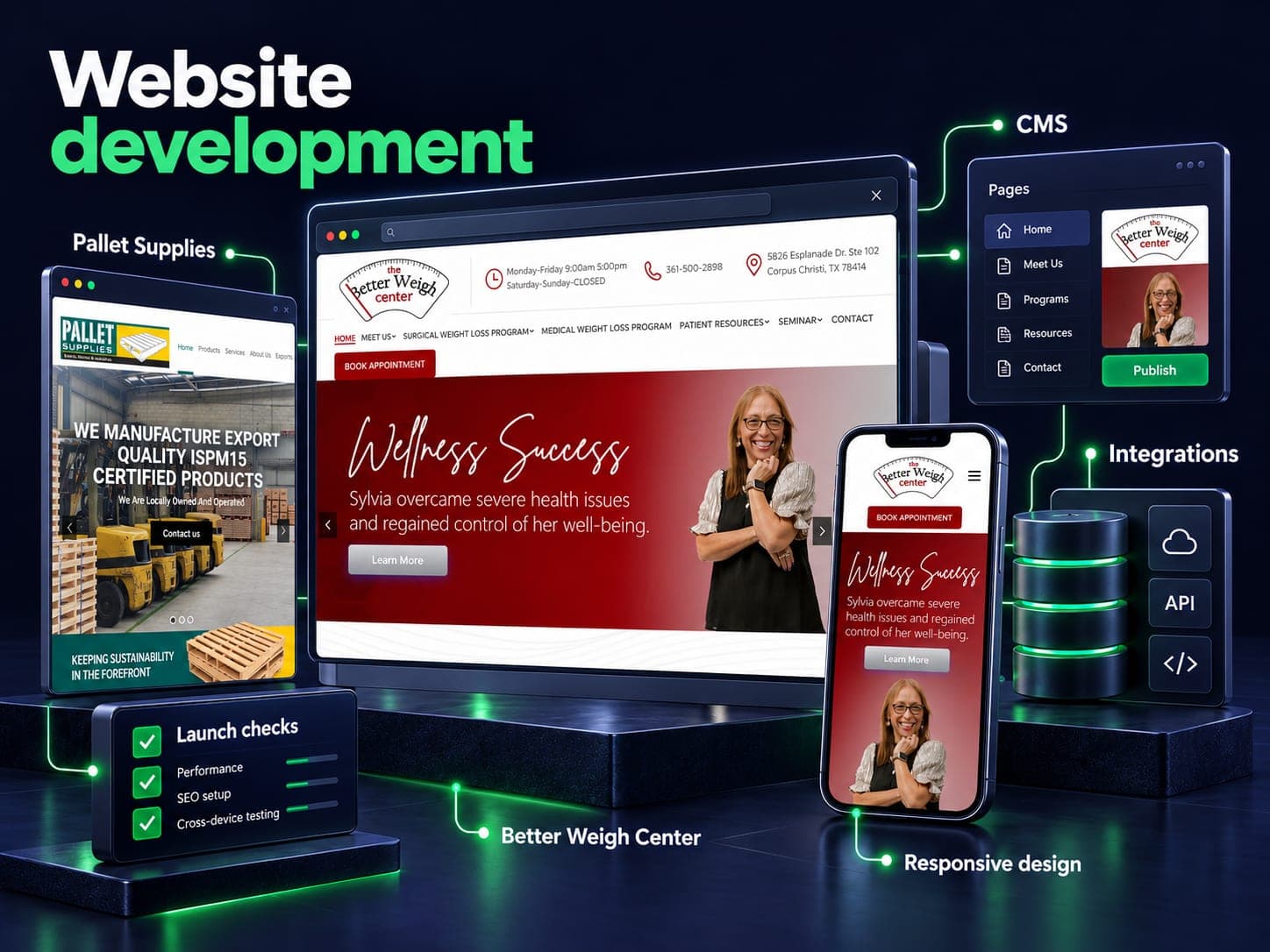
Plan a website around your business
Start with the visitors, content and actions the site needs to support. The brief should cover the page structure, content ownership, forms, integrations and launch requirements. A new build, redesign and migration need different scopes.
Choose a suitable platform
WordPress can suit a content-led site with an editing team. Next.js can suit a custom front end or application with defined integration and rendering needs. For an online store, explore ecommerce website development. The choice depends on the features, team and maintenance requirements.
Agree delivery and launch checks
The proposal should identify design and development work, client-supplied content, integrations, testing, handover and any ongoing care. Define checks for responsive layouts, accessibility, performance, forms and search foundations before launch. For an existing site, inventory useful URLs and agree relevant redirects. A website redesign needs its own migration checks. Our web development practices describe supporting technical considerations.
Review published website work
See Better Weigh Center, Pallet Supplies and Nature’s Point Childcare for documented website scope and screenshots. These are build examples; campaign outcomes require separate evidence.
Planning an Australian website? Start with our Australia website development guide to compare the platform, content and handover scope. The Sydney brief covers service enquiries and CRM routing; the Melbourne brief covers product catalogues and checkout.
For a focused design example, explore our author promotion landing page case study, with its editorial opening, book sections and enquiry form.
Our web design and development services
Custom web design
A design based on the agreed brief, with a prototype for your team to review before development.
Responsive development
Responsive layouts and controls checked on the devices and browsers agreed for the project.
Ecommerce development
Shopify, WooCommerce and Magento stores with payments, shipping rules and tax configured and tested against real orders.
Explore →CMS development
WordPress and headless setups where the fields match how your marketing team thinks, so publishing does not need a developer.
Explore →Web applications
Portals, dashboards, booking and quoting systems, with roles, integrations and audit requirements defined in the scope.
Maintenance & support
Updates, uptime and Core Web Vitals monitoring, backups and small improvements on a monthly retainer with fixed hours.
Australian website guides and related services
Choose a city brief for website requirements, compare WordPress delivery, or explore Australian SEO and digital marketing. Project delivery is coordinated remotely with our Noida team.
How a website project runs
Discoverweek 1–2
Two workshops, a technical and analytics review, and a written problem statement you sign off before anyone opens a design tool.
Prototypeweek 2–4
Wireframes, then a clickable prototype in your brand. You approve the actual thing rather than a slide describing it.
Buildweek 4–8
Staging URL from the first sprint, two-week slices, with speed, accessibility and schema checked at the end of each one.
Launchweek 8–9
URL map and redirects, analytics and Search Console, monitoring switched on, handover and post-launch support as agreed in the scope.
Growongoing
If you want it, the same engineers carry on with SEO, content and conversion work on a monthly retainer.
Websites we’ve built
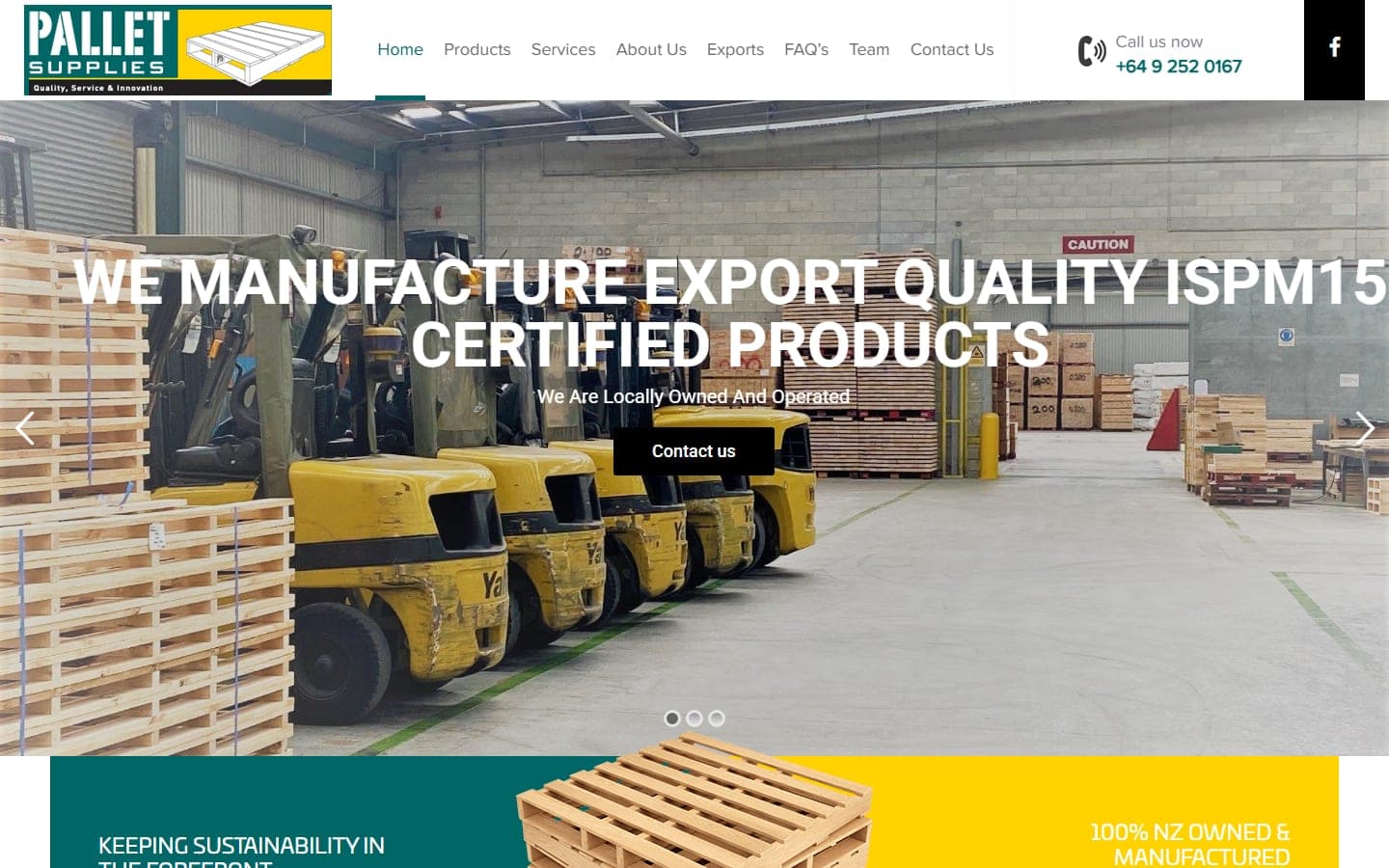
Pallet Supplies
A WordPress site for a 30-year New Zealand pallet manufacturer, built to carry the two things export buyers actually check first: ISPM15 certification and a real team they can call.
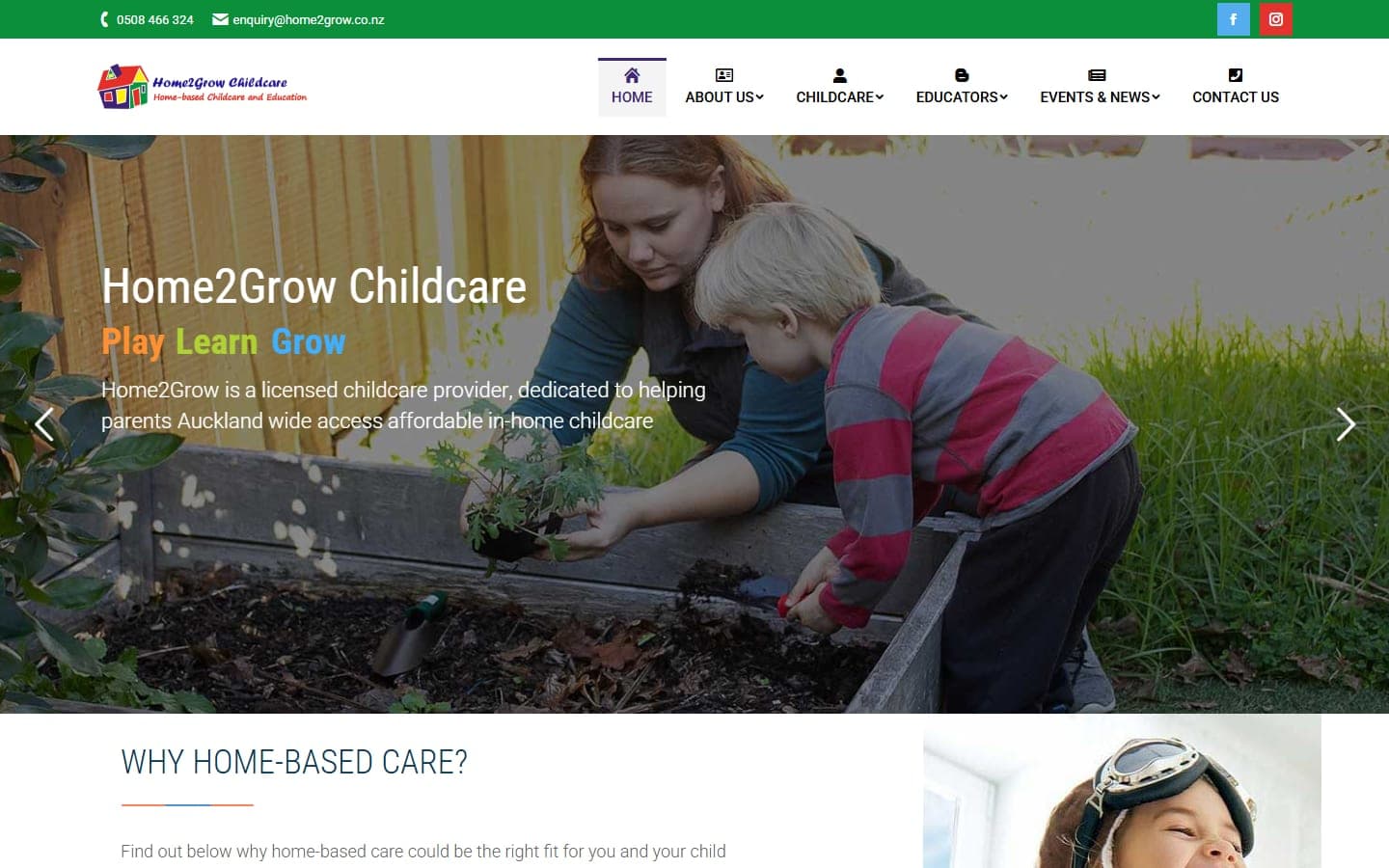
Home2Grow Childcare Ltd
A WordPress site for an Auckland home-based childcare network, built for two different audiences at once, parents finding an educator and educators wanting to join or get support.
Starting from USD 1,499/project
An agreed business website with defined layouts, supplied content, an enquiry form, tracking setup and launch checks. Confirm page count, integrations, content responsibilities, exclusions and the final fee in the proposal. Hosting, licences and ongoing care are separate. Compare WordPress development packages for their named scopes.
Web development, answered
How long does it take to build a website?
Four to eight weeks from kickoff to launch for a brochure or services site, eight to sixteen for ecommerce and web applications. You see a clickable prototype before code exists and a staging URL from the first sprint. In practice, content readiness decides whether we hit the earlier date.
Will I be able to update the site myself?
Yes, and we test that before handover by watching somebody on your team add a page. Every build comes with a CMS set up around your content, a short editor guide and a recording of your own site rather than a generic manual.
How much does a website cost?
Business website development starts at USD 1,499/project for agreed layouts, supplied content, enquiry forms, tracking and launch checks. For a smaller WordPress scope, Starter starts at USD 849/project; compare the WordPress packages for the page limits and deliverables. A standard Shopify or WooCommerce store starts at USD 2,599/project on one agreed platform. Custom web applications and SaaS MVPs start at USD 6,999/project for a focused first release. The proposal confirms the final scope, fee, content responsibilities and any separate hosting or licence costs.
Will the site be SEO-friendly?
The build can include crawlable pages, clear URLs, titles, metadata and appropriate structured data. The scope should also identify performance and accessibility checks. Ongoing content, search analysis and reporting are covered by a separate SEO service. Technical foundations support search discovery; rankings and indexing cannot be guaranteed.
What happens if something breaks after launch?
Thirty days of fixes are included, and genuine emergencies are handled the same day within our hours. After that a maintenance retainer covers updates, monitoring and small changes, with the hours stated so you know what you have bought.
Which platform should we use?
Choose the platform around your content, features, integrations and maintenance team. WordPress can suit a publishing workflow, ecommerce platforms suit store requirements, and a framework such as Next.js can support custom interfaces. Review the trade-offs and agree the recommendation during scoping.
Let’s talk about your website
Send your current URL or brief, priority services, content owner and any integrations. We can discuss the build scope and starting options before preparing a quote.