

Ecommerce website development
Store design, checkout and operational integrations
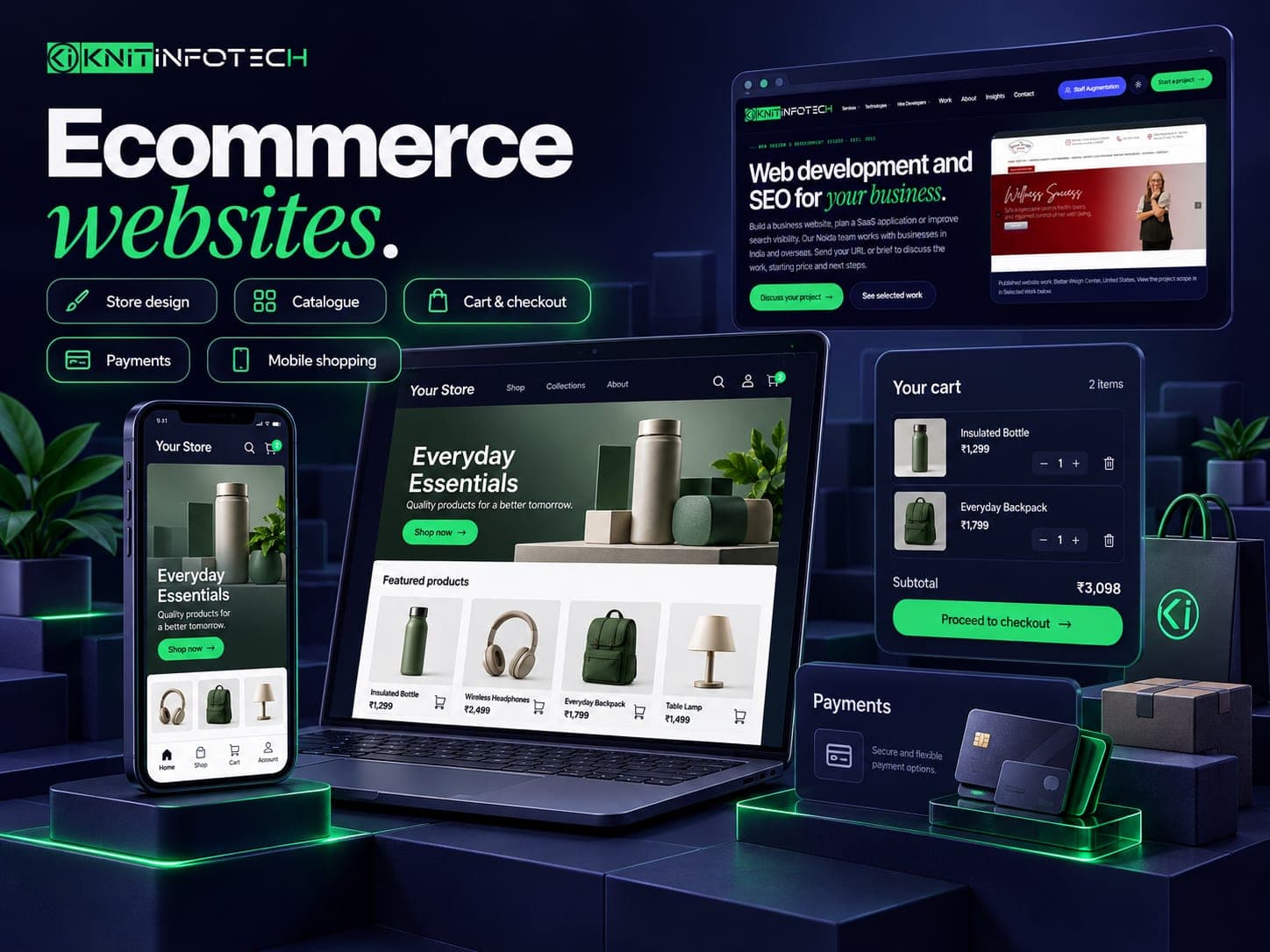
Build a store around the products you sell and the team running it. We cover catalogue structure, mobile shopping, cart and checkout, payment and shipping requirements, and the integrations needed to fulfil orders.
Starting from USD 2,599/projectFinal scope and price agreed before work starts.
Define the store before choosing the platform
Share the product catalogue, customer experiences, payment and shipping requirements, existing platform and business-system integrations. Discuss the supported platform options and agree what belongs in the build or migration.
Scope the buying process
Plan product and category structure, search and filtering, mobile product pages, checkout, transactional emails and content ownership. Payments, tax, stock and shipping rules need client-supplied facts and agreed acceptance checks.
Make migration and launch reviewable
An existing store needs an old-to-new URL map, catalogue and customer-data scope, analytics continuity and a rollback plan. Define safe test products and orders before launch. Live transactions and access to customer data need an agreed workflow.
Plan ongoing responsibilities
Specify who maintains catalogue content, platform updates, integrations and incident handling. Ecommerce SEO is a separate workstream to discuss alongside the build. A redesigned storefront does not by itself establish increased sales.
Related reading: scalable store development.
For platform options, review our CMS and ecommerce services. An existing store with usable product data may also be ready for a focused AI ecommerce pilot, such as search or a reviewed catalogue workflow. Establish the store and integration requirements before adding that scope.
What our ecommerce service includes
Custom store design
Category, product, cart and checkout design based on the catalogue, customer needs and supported platform features.
Cart & checkout
Guest checkout, address lookup, saved cards, and abandonment recovery set up and then tested with real orders before launch.
Payments, shipping & tax
Razorpay, Stripe, PayPal and local gateways, plus carrier rates, zones, GST and per-market tax rules configured and verified.
Catalogue & product management
Variants, bundles, inventory sync and bulk import built so your own team can add a hundred products without asking us.
Mobile commerce
Product navigation and buying controls designed for mobile use, with device coverage agreed before testing.
Ecommerce SEO
Category structure, an agreed approach to filters and variants, and Product structured data that matches eligible visible product information. Search appearance is controlled by Google.
Explore →How a store project runs
Discovery & catalogue reviewweek 1–2
Products, margins, markets, shipping realities and the systems you already run, written up as a scope you sign off.
Platform & architectureweek 2
One recommended platform with the reasoning, a URL map for the migration, and a costed list of the integrations.
Design prototypeweek 3–4
A clickable path from category to product to checkout, reviewed on a phone before anyone builds it.
Build & integrateweek 4–10
Built on staging, catalogue imported, then payments and shipping tested with real low-value transactions rather than sandbox mode alone.
Launch & watchweek 10–11
Redirects live, analytics and Search Console configured, and daily checks for a month on orders, indexation and errors.
Platforms we build on
Shopping and booking websites

Teeth 32
An aircraft-themed WordPress website presenting Chewy and TOPGUM teething toys through product imagery, feature explanations and Amazon purchase links.
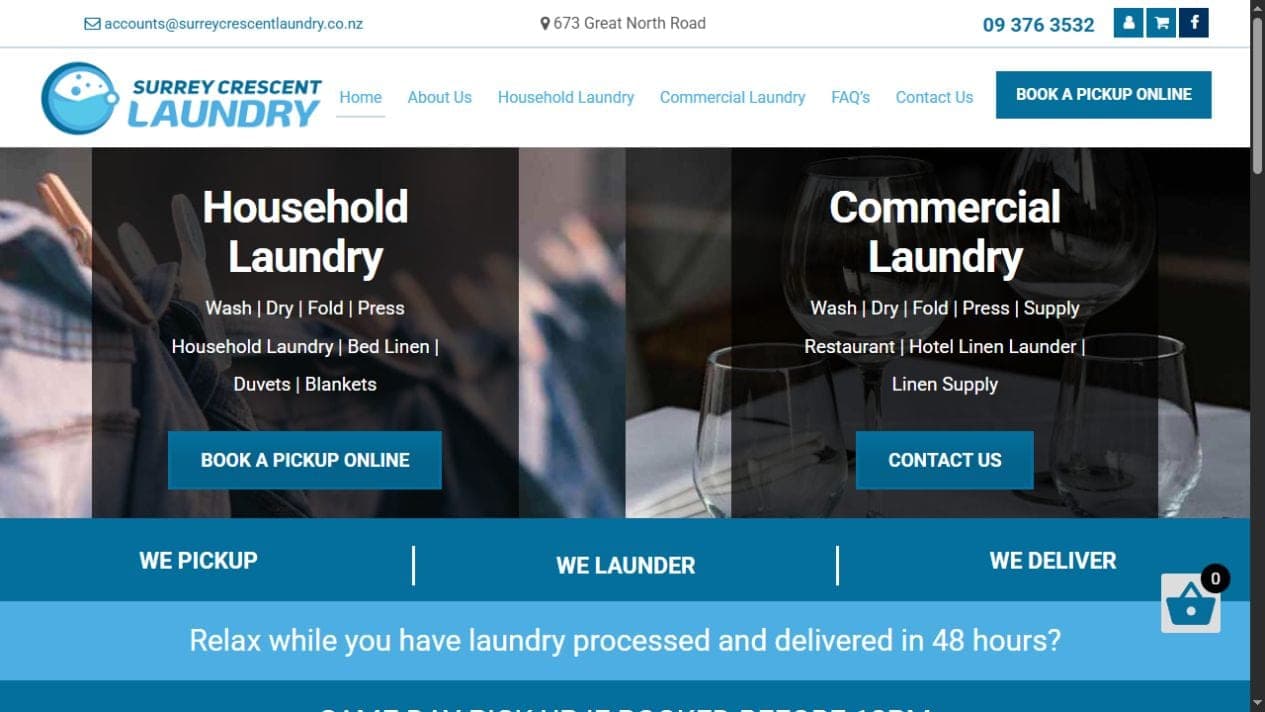
Surrey Crescent Laundry
A WordPress website for an Auckland laundry business, separating household pickup bookings from commercial enquiries and presenting a priced laundry catalogue.
Starting from USD 2,599/project
One standard Shopify or WooCommerce store with an agreed catalogue, theme, checkout and payment/shipping configuration. This is the same E-commerce package shown on our WordPress development page. Migration, custom extensions, Magento, headless architecture and complex integrations need a separate scope. Hosting, platform subscriptions and paid licences are separate.
Ecommerce, answered
Which ecommerce platform is best for my store?
Start with the catalogue, buying requirements, integrations and the team that will run the store. Shopify, WooCommerce, Magento and custom storefronts have different costs and maintenance responsibilities. Compare supported features and ongoing ownership before agreeing a platform.
How long does an ecommerce build take?
Eight to twelve weeks for a typical store, longer with a big catalogue, custom integrations or a migration from a system with messy data. You see a clickable checkout prototype in week three or four, well before anything is built.
How much does an online store cost?
Starting from USD 2,599/project for one standard Shopify or WooCommerce store. This is the same E-commerce package shown on our WordPress development page. The proposal confirms catalogue size, theme work, checkout, payment and shipping configuration, exclusions and the final price. Migration, Magento, custom extensions, headless builds and complex integrations are scoped separately. Hosting, platform subscriptions and paid licences are separate.
What features does an online store actually need?
Fast search and filters, product pages that answer the obvious questions, guest checkout, real shipping and tax rules, order emails that arrive, analytics, and a way for your team to manage stock. Everything else can wait until those convert.
How do you keep the store secure?
Payments go through PCI-compliant gateways so card data never reaches your server. HTTPS throughout, platform and extension updates on a schedule, role-based admin access, and offsite backups tested by restoring them. It is documented at handover.
Can you connect the store to our other systems?
Yes: ERP and inventory, CRM and email such as HubSpot, Klaviyo or Zoho, shipping carriers, marketplaces and accounting. Each integration is listed and priced separately in the scope, because that is where budgets usually go astray.
Let’s talk about your online store
Send the current store or product outline, payment and shipping needs, and existing integrations. We can discuss platform options and a scoped quote.